All about Cannabis Social Clubs in Spain
 Lala Maïga
Follow us on 
Cannabis Social Clubs (CSCs) in Spain play a unique role in the European landscape. These organizations enable members to grow and consume cannabis in a legally secure, community-based setting. Ready to find out all about Cannabis Social Clubs in Spain ?
The history and origins of the Cannabis Social Club in Spain
Their story dates back to the 1990s, when Spain's cannabis laws began to evolve. At that time, personal consumption was decriminalized, paving the way for new ways of using the plant legally.
The first CSCs appeared in the early 2000s, in response to growing demand for a legal framework for the collective cultivation and consumption of cannabis. These clubs operate on the principle of self-cultivation: members come together to grow cannabis for personal use. In this way, they avoid the risks associated with the black market.
CSCs operate on the basis of Article 368 of the Spanish Penal Code, which states that private consumption of drugs is not a criminal offence. As a result, they thrive and establish strict internal rules for the cultivation and distribution of cannabis among their members.
How does a CSC work in Spain?
The operation of these clubs is based on a well-defined legal structure and strict rules to guarantee the safety and conformity of activities.
To join a CSC, you must first be sponsored by an existing member. This first step is essential to ensure that new members understand and respect the rules. Next, you'll need to fill out a registration form and pay an annual membership fee, which will fund the club's activities, including cannabis cultivation.
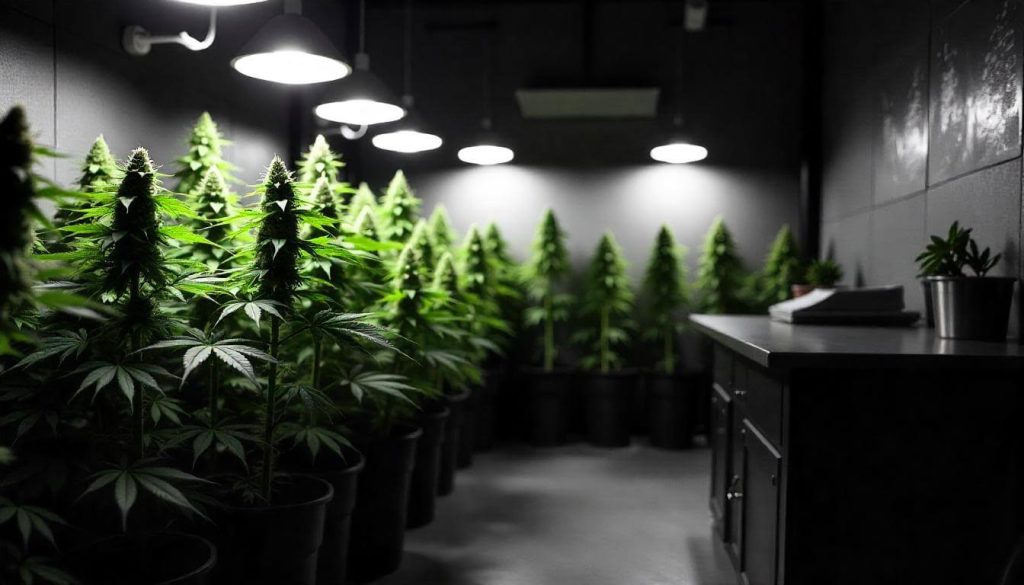
CSCs operate as non-profit associations. Members come together to grow cannabis for their own personal consumption, in private, secure premises, often managed by the club itself. Quantities grown are strictly controlled to meet members' needs and avoid any form of commercial sale or distribution.
Each member receives a set amount of cannabis, usually measured in grams per month. It must be consumed within the club or in a private setting.
Spanish CSCs are committed to transparency and legal compliance. They maintain detailed records of their activities, including the quantity of cannabis grown and distributed.
Legislation and regulations governing Spanish CSCs
In Spain, personal consumption of cannabis is not penalized, as long as it takes place in a private space. This legal tolerance is the cornerstone on which CSCs are built. These members grow and share cannabis for personal use, in a closed and secure environment.
Interpretation of the law has enabled CSCs to develop, although the commercial sale and distribution of cannabis remains illegal in Spain.
To guarantee their legality, CSCs must comply with a number of strict rules concerning membership and the quantity of cannabis grown and distributed. They must also grow cannabis only for registered members, in limited quantities to suit their personal needs. Clubs cannot advertise or solicit new members openly, which limits their visibility and expansion.
Even so, CHCs face constant legal challenges. Laws can vary from region to region, and some local authorities may adopt stricter attitudes towards these clubs. As a result, CSCs have to navigate an ever-changing legal landscape and adapt to new laws to continue operating legally.
What is the socio-cultural impact of Cannabis Clubs in Spain?
On the social front, CHCs have helped demystify cannabis. By providing a safe, regulated environment for consumption, they help to reduce preconceived ideas about cannabis use. Their members can consume responsibly, without fear of legal prosecution or the dangers of the black market.
From a cultural point of view, CSCs reinforce the sense of community. They are meeting places where cannabis enthusiasts can share their experiences and knowledge. They organize regular events, workshops and conferences, creating a space for exchange and learning.
CSCs play an educational role, raising public awareness of the issues surrounding cannabis. They take part in prevention and information campaigns, sometimes in collaboration with public institutions or NGOs. Their aim is to promote responsible and informed consumption, by providing resources and teaching aids.
Finally, the existence of CSCs influences public policy. By demonstrating that it is possible to regulate cannabis consumption effectively and safely, these clubs are advocating more progressive legislative reforms. They show that alternatives to the prohibitionist model exist, and hope to inspire change in other countries.
Challenges and criticisms for CCS
Although personal consumption of cannabis is tolerated, laws can vary considerably from region to region. Some local governments adopt a stricter approach that limits the ability of CSCs to operate freely. This legal uncertainty forces clubs to constantly adapt to new legal provisions.
Despite the efforts of CSCs to promote safe, responsible consumption, some members of the public still view cannabis in a negative light. This stigma can hinder the recruitment of new members and limit the social acceptance of clubs. CSCs must therefore continue to educate the public and deconstruct the prejudices associated with cannabis consumption.
Some critics claim that these clubs encourage excessive consumption, particularly among young people. To counter this criticism, CSCs implement strict measures to control access and regulate the amount of cannabis distributed to each member. They also organize information sessions on the risks of cannabis abuse and recommend responsible consumption practices.
As non-profit organizations, they depend on membership fees to finance their activities. Finding a stable financial balance while keeping membership costs affordable can therefore quickly become complex.
Find a Cannabis Club in Barcelona
Planning a trip to Barcelona and want to discover a Cannabis Social Club?
Barcelona is home to some of Spain's best-known and most respected CSCs. Among them, La Mesa is particularly popular. Located in the heart of the city, this club offers a friendly and secure environment for its members. Membership is by referral, and once a member, you can enjoy their modern facilities and wide selection of products.
Another well-known club is the Barcelona Weed Club. Known for its relaxed atmosphere and friendly staff, this CSC is ideal if you're looking to meet other cannabis enthusiasts and exchange experiences. The club also organizes regular events and workshops for its members.
Circulo is also a very famous club in Barcelona. With an artistic atmosphere and an active community, this CSC attracts members interested in culture and enriching discussions around cannabis. Their program of events is rich and varied, ranging from art exhibitions to educational lectures.
Find a Cannabis Club in Madrid
Among Madrid's most renowned clubs, Falcanna stands out for its welcoming atmosphere and quality service. Located in the city center, it offers a wide range of products and regular events for its members.
Another renowned club? The High Class Madrid. Known for its elegant decor and relaxed atmosphere, this CSC attracts a diverse clientele, ranging from young professionals to long-time enthusiasts. The club frequently organizes workshops and information sessions to promote responsible drinking.
Cannabis Store Amsterdam Madrid is another excellent option. This club is renowned for its commitment to quality and transparency. Members benefit from personalized advice and access to carefully selected products.
What does the future hold for the Cannabis Social Club in Spain?
Although CCSs currently operate in a legal gray area, reforms could either strengthen their status or impose stricter restrictions. Ongoing legislative debates at both national and European level will have a significant impact on their future operation. Clarification of the law could provide CCSs with a more solid legal basis, facilitating their management and development.
In terms of social perception, CHCs continue to play a key role in the normalization and demystification of cannabis. Their responsible, community-based approach is helping to change mentalities, making cannabis an open rather than a taboo subject for discussion.
However, strict regulation and economic pressures may limit their growth. Increased competition, both on the legal and black markets, could also pose additional obstacles.
Follow us on

Join the Community
Don't miss any news with our newsletter